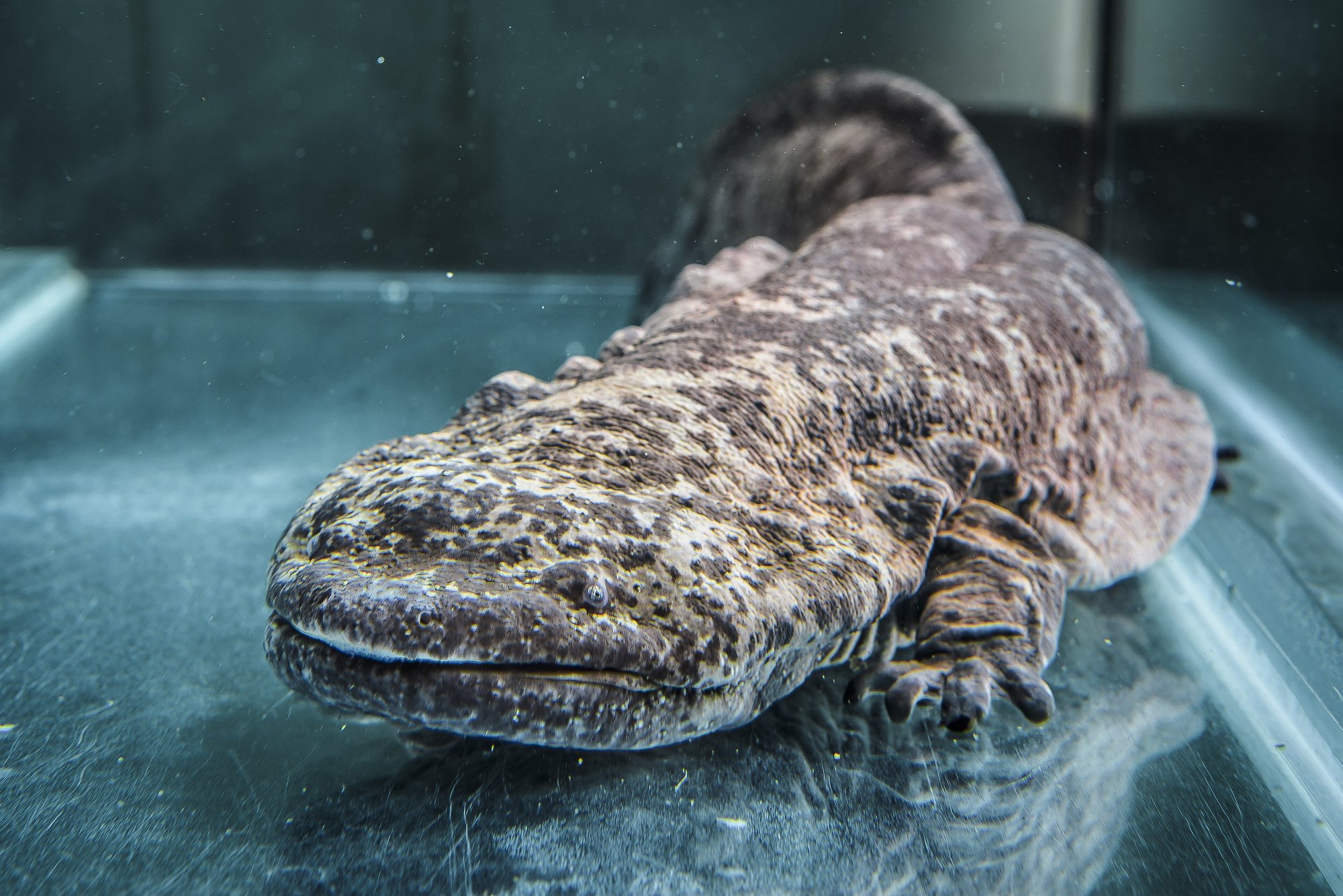
Chinese giant salamander (Andrias davidianus)
Amphibians · Difficulty: Expert
Key facts and care guidance for Chinese giant salamander (Andrias davidianus) (origin: China, cool mountain streams and rivers). Adult size around typically ~1.15–1.3 m, up to 1.8 m (the largest amphibian). Life expectancy 50–60+ years. The values below are carefully researched guidance.
Short answers
Chinese giant salamander: How big does the enclosure need to be?
A very large cold-water tank (several m²); only for specialist institutions.
Chinese giant salamander: What temperature does it need?
Daytime water 10–20 °C (cool), at night 10–18 °C.
Chinese giant salamander: Does it need UVB lighting?
UVB: No.
Chinese giant salamander: How long do they live?
Life expectancy: 50–60+ years.
Chinese giant salamander: Is it suitable for beginners?
No – better suited to experienced keepers (difficulty: Expert).
Climate
- Daytime temperature
- water 10–20 °C (cool)
- Night temperature
- 10–18 °C
- Basking spot
- —
- Humidity
- — (fully aquatic)
- UVB
- No
Enclosure
- Minimum size
- a very large cold-water tank (several m²); only for specialist institutions
- Substrate
- Clean, oxygen-rich, cool flowing water with rock structures and caves
Feeding
- Food
- Carnivorous: fish, crayfish, amphibians, worms, insects
- Feeding interval
- 1–2× a week (a slow metabolism)
Key facts
- Adult size
- typically ~1.15–1.3 m, up to 1.8 m (the largest amphibian)
- Life expectancy
- 50–60+ years
- Origin
- China, cool mountain streams and rivers
- Protection status
- CITES Appendix I, IUCN "Critically Endangered"; trade and private keeping are effectively prohibited
- Brumation
- A cool winter spell (3–10 °C in nature)
- Cohabitation
- Keeping singly. The animals are solitary and territorial, and cannibalism is common: in studies conspecifics made up about 27-28 % of stomach contents. Larvae and juveniles are also reared separately.
Notes
CITES I – legal private keeping is practically ruled out. It needs an enormous, cool, very clean flowing-water system; for specialised institutions only.
Do you keep this species?
Add your animal to Reptoria – Reptoria reminds you about feeding and shedding. Add your animal for free →
Look for Chinese giant salamander (Andrias davidianus) in the marketplace →
Related species
- Italian crested newt (Triturus carnifex) – Intermediate
- Alpine salamander (Salamandra atra) – Expert
- Anderson's crocodile newt (Echinotriton andersoni) – Expert
- Anderson's salamander (Ambystoma andersoni) – Intermediate
- Axolotl (Ambystoma mexicanum) – Beginner to intermediate
- Alpine newt (Ichthyosaura alpestris) – Beginner
- Blue-tailed fire-bellied newt (Cynops cyanurus) – Beginner
- Chinese fire-bellied newt (Cynops orientalis) – Beginner
What you need to start
To keep Chinese giant salamander (Andrias davidianus) you typically need: a suitable enclosure (a very large cold-water tank (several m²); only for specialist institutions), substrate (Clean, oxygen-rich, cool flowing water with rock structures and caves), a heat source with a thermostat, thermometer and hygrometer, a water dish and hides. You will find equipment in the Reptoria marketplace.
The complete, interactive care database is in the Reptoria app.
Last updated: 8 November 2026 · Editor: Reptoria editorial team · Sources include: https://animaldiversity.org/accounts/Andrias_davidianus/, https://de.wikipedia.org/wiki/Chinesischer_Riesensalamander, https://en.wikipedia.org/wiki/Andrias_davidianus, https://en.wikipedia.org/wiki/Chinese_giant_salamander
All values are non-binding guidance and do not replace expert advice. Research thoroughly from several sources before acquiring and keeping an animal, and observe the applicable law (species and animal protection in particular).