Common basilisk (Basiliscus basiliscus)
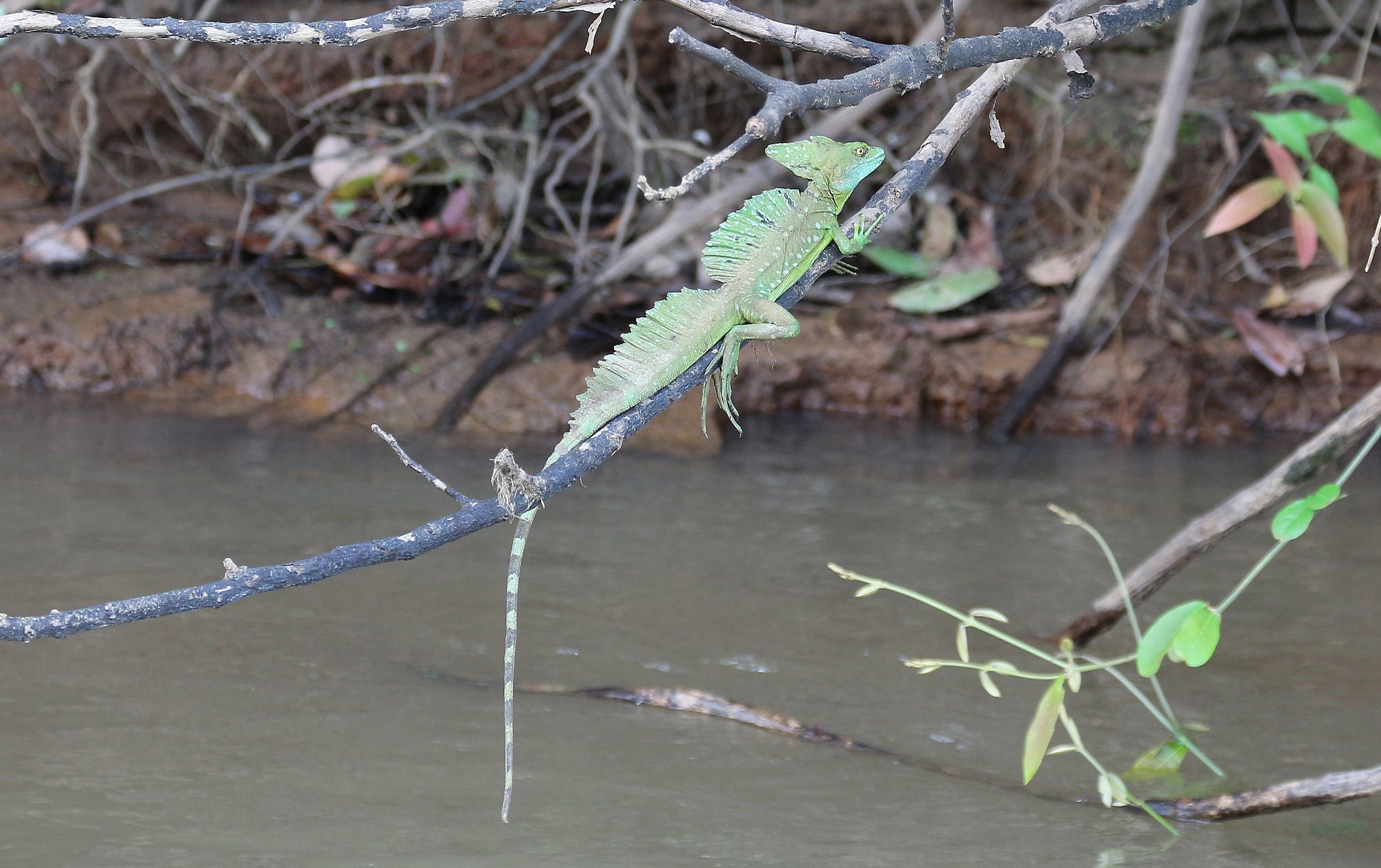
Iguanas · Difficulty: Intermediate
Key facts and care guidance for Common basilisk (Basiliscus basiliscus) (origin: Central America to north-western South America (Nicaragua, Costa Rica, Panama, Colombia, Venezuela, Ecuador)). Adult size around males up to ~80 cm total length including the tail (SVL ~24 cm), females smaller. Life expectancy approx. 7–10 years. The values below are carefully researched guidance.
Short answers
Common basilisk: How big does the enclosure need to be?
150×80×180 cm (tall format) for one adult animal; a group from ~300×200×250 cm.
Common basilisk: What temperature does it need?
Daytime 26–30 °C, basking spot 35–40 °C, at night 20–22 °C.
Common basilisk: Does it need UVB lighting?
UVB: UVB needed (a UVA/UVB lamp, Ferguson zone 2).
Common basilisk: How long do they live?
Life expectancy: approx. 7–10 years.
Common basilisk: Is it suitable for beginners?
Rather not – it is considered an intermediate species (difficulty: Intermediate).
Climate
- Daytime temperature
- 26–30 °C
- Night temperature
- 20–22 °C
- Basking spot
- 35–40 °C
- Humidity
- 70–90 % by day, up to 100 % at night
- UVB
- UVB needed (a UVA/UVB lamp, Ferguson zone 2)
Enclosure
- Minimum size
- 150×80×180 cm (tall format) for one adult animal; a group from ~300×200×250 cm
- Substrate
- A damp forest-floor or coco humus and soil mix with leaf litter; a large water section (~25 °C) is essential
Feeding
- Food
- Insects (crickets, locusts, roaches, superworms), fish, young mice or chicks, a little fruit
- Feeding interval
- adults 2–3×/week, juveniles daily
Key facts
- Adult size
- males up to ~80 cm total length including the tail (SVL ~24 cm), females smaller
- Life expectancy
- approx. 7–10 years
- Origin
- Central America to north-western South America (Nicaragua, Costa Rica, Panama, Colombia, Venezuela, Ecuador)
- Protection status
- Not listed under CITES, no special protected status
- Brumation
- None; possibly a slightly drier spell
- Cohabitation
- Keep them singly, or one male plus three or four females (a harem) in a very large enclosure. NEVER keep males together (territorial). A plain 1.1 pair is risky (the female is under constant stress) → provide escape routes and a visual screen
Notes
Shy like plumifrons; a large water section and plenty of climbing height are needed. It can run across water (the "Jesus lizard"). A very high space requirement, often underestimated.
Do you keep this species?
Add your animal to Reptoria – Reptoria reminds you about feeding and shedding. Add your animal for free →
Look for Common basilisk (Basiliscus basiliscus) in the marketplace →
Related species
- Brown basilisk (Basiliscus vittatus) – Intermediate
- Plumed basilisk (Basiliscus plumifrons) – Intermediate
- Red-headed basilisk (Basiliscus galeritus) – Expert
- Serrated casquehead iguana (Laemanctus serratus) – Intermediate
- Hernandez's helmeted basilisk (Corytophanes hernandesii) – Expert
- Eastern casquehead iguana (Laemanctus longipes) – Intermediate
- Ghost anole (Anolis lemurinus) – Intermediate
- Aguero's false chameleon (Chamaeleolis agueroi) – Intermediate
What you need to start
To keep Common basilisk (Basiliscus basiliscus) you typically need: a suitable enclosure (150×80×180 cm (tall format) for one adult animal; a group from ~300×200×250 cm), substrate (A damp forest-floor or coco humus and soil mix with leaf litter; a large water section (~25 °C) is essential), a heat source with a thermostat, UVB lighting, thermometer and hygrometer, a water dish and hides. You will find equipment in the Reptoria marketplace.
The complete, interactive care database is in the Reptoria app.
Last updated: 9 October 2026 · Editor: Reptoria editorial team · Sources include: https://de.wikipedia.org/wiki/Helmbasilisk, https://reptile-database.reptarium.cz/species?genus=Basiliscus&species=basiliscus
All values are non-binding guidance and do not replace expert advice. Research thoroughly from several sources before acquiring and keeping an animal, and observe the applicable law (species and animal protection in particular).