Common chuckwalla (Sauromalus ater)
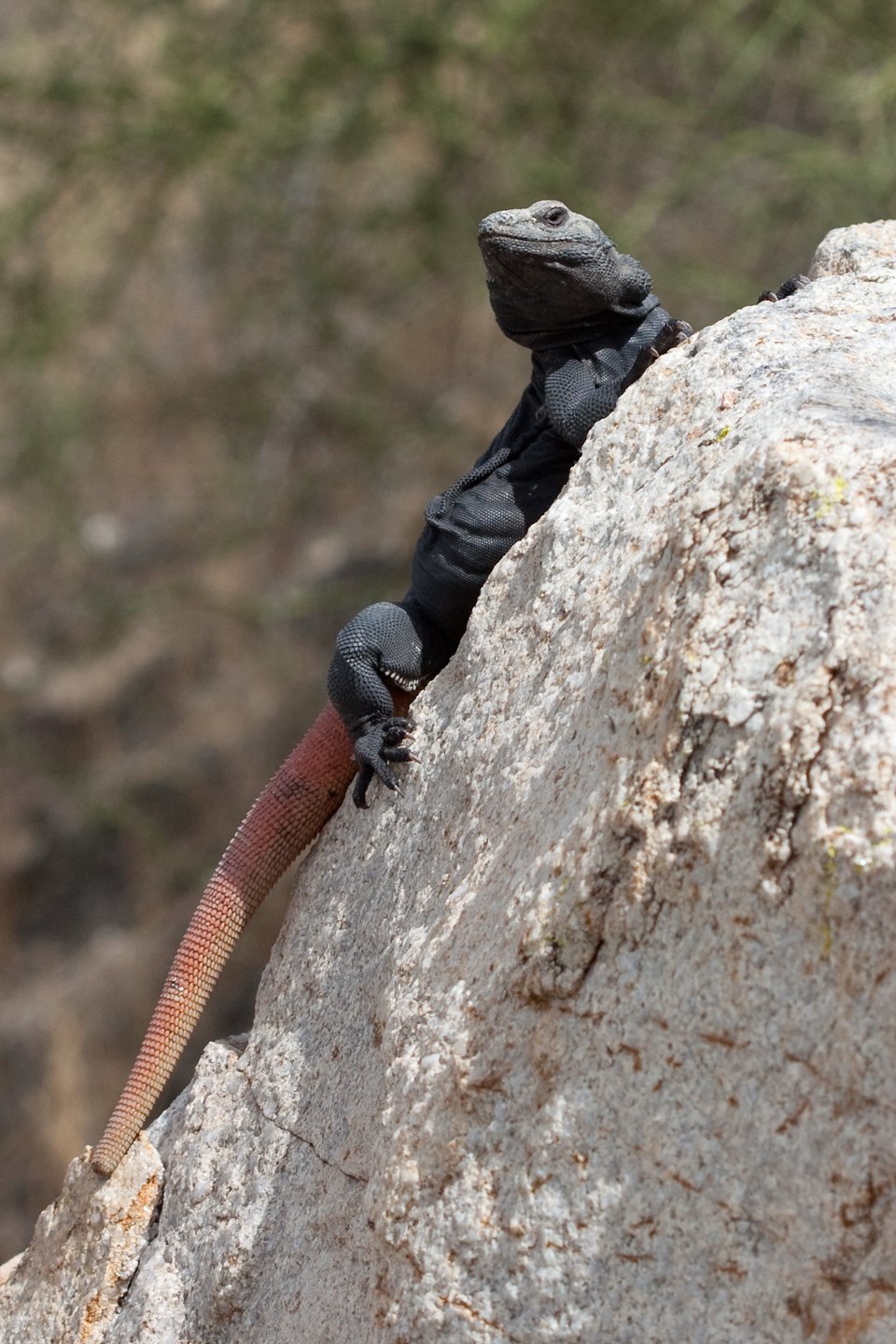
Iguanas · Difficulty: Intermediate
Key facts and care guidance for Common chuckwalla (Sauromalus ater) (origin: The south-western USA / north-western Mexico (deserts)). Adult size around ~30–40 cm total length. Life expectancy 15–25 years. The values below are carefully researched guidance.
Short answers
Common chuckwalla: How big does the enclosure need to be?
A pair at least 150×80×80 cm with rock crevices (taller is better).
Common chuckwalla: What temperature does it need?
Daytime 30–35 °C (cooler zone ~28 °C), basking spot Basking spot 45–50 °C, at night 18–22 °C.
Common chuckwalla: Does it need UVB lighting?
UVB: Essential (desert-grade UVB, 10–12 %).
Common chuckwalla: How long do they live?
Life expectancy: 15–25 years.
Common chuckwalla: Is it suitable for beginners?
Rather not – it is considered an intermediate species (difficulty: Intermediate).
Climate
- Daytime temperature
- 30–35 °C (cooler zone ~28 °C)
- Night temperature
- 18–22 °C
- Basking spot
- Basking spot 45–50 °C
- Humidity
- 20–40 % (dry)
- UVB
- Essential (desert-grade UVB, 10–12 %)
Enclosure
- Minimum size
- a pair at least 150×80×80 cm with rock crevices (taller is better)
- Substrate
- A sand-loam mix, stable rock structures with crevices
Feeding
- Food
- Purely plant-based (flowers, leaves, wild herbs)
- Feeding interval
- Adults (almost) daily on plant food
Key facts
- Adult size
- ~30–40 cm total length
- Life expectancy
- 15–25 years
- Origin
- The south-western USA / north-western Mexico (deserts)
- Protection status
- —
- Brumation
- A winter rest of ~6–8 weeks (cooler)
- Cohabitation
- Keep in pairs or as a harem: males are territorial, and several males fight over territory and the best basking spot until one is injured or permanently pushed into a corner. Females generally tolerate each other but each need their own basking and hiding spots; feed separately if there is a size difference.
Notes
A desert dweller with high warmth and UVB requirements. It needs rock crevices to wedge itself into, and a dry climate.
Do you keep this species?
Add your animal to Reptoria – Reptoria reminds you about feeding and shedding. Add your animal for free →
Look for Common chuckwalla (Sauromalus ater) in the marketplace →
Related species
- Anegada ground iguana (Cyclura pinguis) – Expert
- Grand Cayman blue iguana (Cyclura lewisi) – Expert
- Cape spiny-tailed iguana (Ctenosaura hemilopha) – Intermediate
- Fiji banded iguana (Brachylophus fasciatus) – Expert
- Green iguana (Iguana iguana) – Intermediate to expert
- Guatemalan spiny-tailed iguana (Ctenosaura palearis) – Expert
- Helmeted iguana (Corytophanes cristatus) – Expert
- Jamaican iguana (Cyclura collei) – Expert
What you need to start
To keep Common chuckwalla (Sauromalus ater) you typically need: a suitable enclosure (a pair at least 150×80×80 cm with rock crevices (taller is better)), substrate (A sand-loam mix, stable rock structures with crevices), a heat source with a thermostat, UVB lighting, thermometer and hygrometer, a water dish and hides. You will find equipment in the Reptoria marketplace.
The complete, interactive care database is in the Reptoria app.
Last updated: 9 October 2026 · Editor: Reptoria editorial team · Sources include: https://de.wikipedia.org/wiki/Chuckwalla, https://reptile-database.reptarium.cz/species?genus=Sauromalus&species=ater
All values are non-binding guidance and do not replace expert advice. Research thoroughly from several sources before acquiring and keeping an animal, and observe the applicable law (species and animal protection in particular).