Phantasmal poison frog (Epipedobates tricolor)
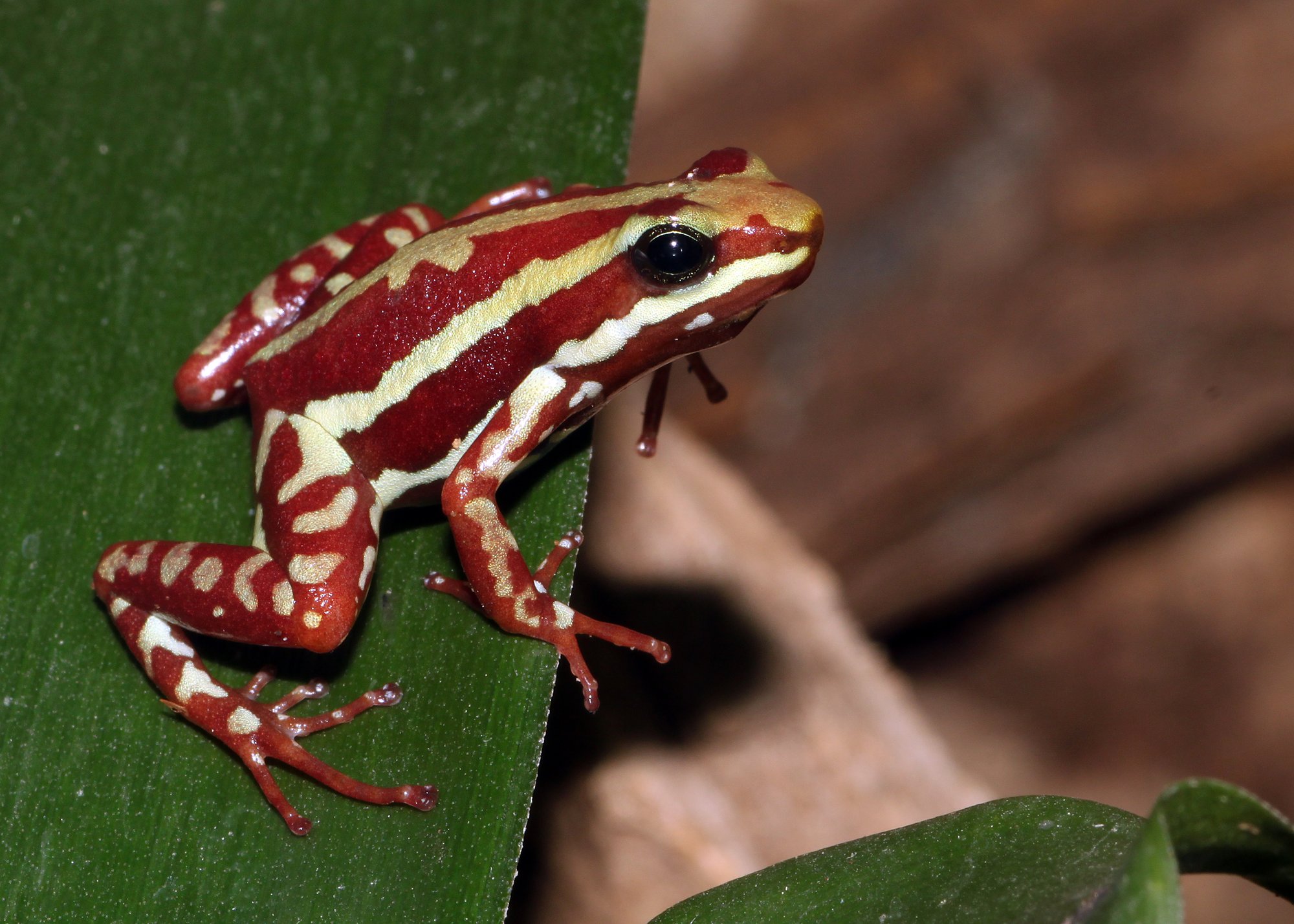
Amphibians · Difficulty: Beginner to intermediate
Key facts and care guidance for Phantasmal poison frog (Epipedobates tricolor) (origin: Zentral-Ecuador: Andenhänge der Provinz Bolívar, Bachläufe in etwa 1000–1770 m Höhe). Adult size around ca. 2–2,3 cm. Life expectancy 8–12 years. The values below are carefully researched guidance.
Short answers
Phantasmal poison frog: How big does the enclosure need to be?
40 × 40 × 45–50 cm (at least 30 × 30 × 45) for a pair.
Phantasmal poison frog: What temperature does it need?
Daytime 22–26 °C, at night ~20 °C.
Phantasmal poison frog: Does it need UVB lighting?
UVB: Optional.
Phantasmal poison frog: How long do they live?
Life expectancy: 8–12 years.
Phantasmal poison frog: Is it suitable for beginners?
Partly – manageable with some prior knowledge (difficulty: Beginner to intermediate).
Climate
- Daytime temperature
- 22–26 °C
- Night temperature
- ~20 °C
- Basking spot
- —
- Humidity
- 70–90 %
- UVB
- Optional
Enclosure
- Minimum size
- 40 × 40 × 45–50 cm (at least 30 × 30 × 45) for a pair
- Substrate
- Rainforest, bromeliads, leaf litter, moss, a shallow water section
Feeding
- Food
- Fruit flies, springtails, small house crickets
- Feeding interval
- Daily to several times a week, dusted
Key facts
- Adult size
- ca. 2–2,3 cm
- Life expectancy
- 8–12 years
- Origin
- Zentral-Ecuador: Andenhänge der Provinz Bolívar, Bachläufe in etwa 1000–1770 m Höhe
- Protection status
- CITES Appendix II / EU Annex B, registration required
- Brumation
- None
- Cohabitation
- In pairs or as a small group of one male and two females is the least stressful option. Larger groups are possible in large, heavily structured enclosures, as with the closely related E. anthonyi; drawback: males are territorial and defend their territory vigorously, so suppressed animals must be removed promptly. Raise juveniles separately from adults, because the larger frogs get to the food first. Do not mix species.
Notes
A good beginner's poison dart frog, and loud callers. They cannot swim – shallow water only; captive-bred animals are non-toxic.
Do you keep this species?
Add your animal to Reptoria – Reptoria reminds you about feeding and shedding. Add your animal for free →
Look for Phantasmal poison frog (Epipedobates tricolor) in the marketplace →
Related species
- Anthony's poison arrow frog (Epipedobates anthonyi) – Beginner
- Yellow-bellied poison frog (Ameerega hahneli) – Intermediate
- Anthony's poison frog (Hyloxalus nexipus) – Intermediate
- Bassler's poison frog (Ameerega bassleri) – Intermediate
- Poison frogs (Ranitomeya amazonica) – Intermediate
- Poison frogs (Ranitomeya imitator) – Beginner to intermediate
- Poison frogs (Ranitomeya variabilis) – Intermediate
- Blue poison dart frog (Dendrobates azureus) – Beginner to intermediate
What you need to start
To keep Phantasmal poison frog (Epipedobates tricolor) you typically need: a suitable enclosure (40 × 40 × 45–50 cm (at least 30 × 30 × 45) for a pair), substrate (Rainforest, bromeliads, leaf litter, moss, a shallow water section), a heat source with a thermostat, UVB lighting, thermometer and hygrometer, a water dish and hides. You will find equipment in the Reptoria marketplace.
The complete, interactive care database is in the Reptoria app.
Last updated: 9 October 2026 · Editor: Reptoria editorial team · Sources include: https://en.wikipedia.org/wiki/Phantasmal_poison_frog, https://de.wikipedia.org/wiki/Dreistreifen-Baumsteiger, https://de.wikipedia.org/wiki/Epipedobates_anthonyi, https://www.alismenagerie.co.uk/care/reptiles-and-amphibians/phantasmal-poison-dart-frog-care
All values are non-binding guidance and do not replace expert advice. Research thoroughly from several sources before acquiring and keeping an animal, and observe the applicable law (species and animal protection in particular).