Desert iguana (Dipsosaurus dorsalis)
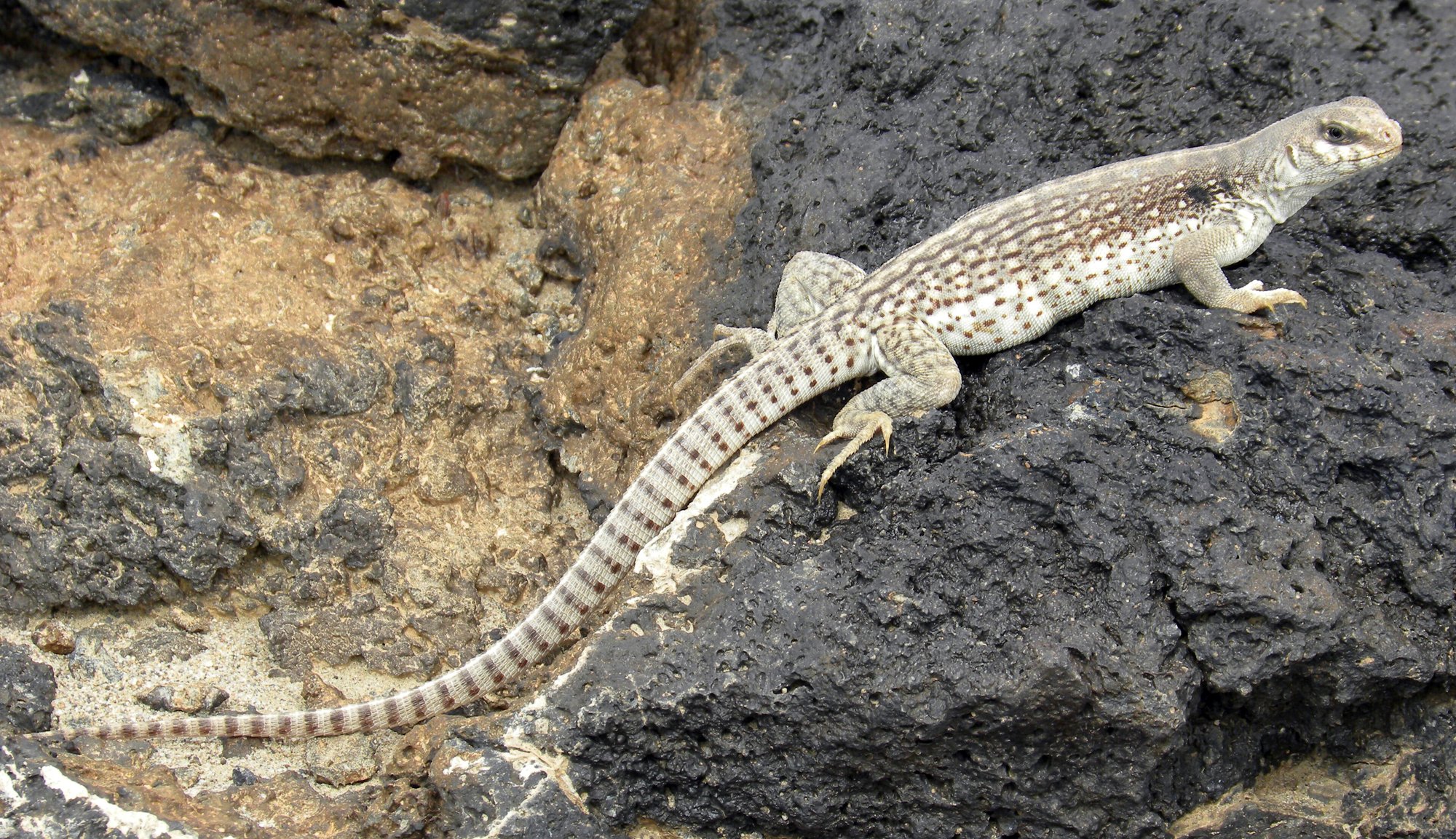
Iguanas · Difficulty: Intermediate
Key facts and care guidance for Desert iguana (Dipsosaurus dorsalis) (origin: The south-west of the USA and north-west of Mexico (the Sonoran and Mojave Deserts)). Adult size around approx. 40 cm total length including the tail (SVL up to ~15 cm). Life expectancy 10–15+ years. The values below are carefully researched guidance.
Short answers
Desert iguana: How big does the enclosure need to be?
120×60×60 cm for one adult animal; a group of one male plus two females from ~160×80×80 cm.
Desert iguana: What temperature does it need?
Daytime 32–38 °C, basking spot 45–50 °C (high basking spot), at night 18–22 °C.
Desert iguana: Does it need UVB lighting?
UVB: UVB essential, high (a desert sun species, Ferguson zone 4, UV index 5–7).
Desert iguana: How long do they live?
Life expectancy: 10–15+ years.
Desert iguana: Is it suitable for beginners?
Rather not – it is considered an intermediate species (difficulty: Intermediate).
Climate
- Daytime temperature
- 32–38 °C
- Night temperature
- 18–22 °C
- Basking spot
- 45–50 °C (high basking spot)
- Humidity
- low, 30–50 % (briefly higher in the morning)
- UVB
- UVB essential, high (a desert sun species, Ferguson zone 4, UV index 5–7)
Enclosure
- Minimum size
- 120×60×60 cm for one adult animal; a group of one male plus two females from ~160×80×80 cm
- Substrate
- A deep, diggable desert sand or sand-loam mix, with stones and caves
Feeding
- Food
- Mostly plant-based (flowers, leaves, herbs – in the wild mainly creosote bush), few insects
- Feeding interval
- adults plant food daily, insects occasionally
Key facts
- Adult size
- approx. 40 cm total length including the tail (SVL up to ~15 cm)
- Life expectancy
- 10–15+ years
- Origin
- The south-west of the USA and north-west of Mexico (the Sonoran and Mojave Deserts)
- Protection status
- Not listed under CITES (wild-caught animals are legally tradable too); no special protected status
- Brumation
- A winter rest or brumation is needed: 6–12 weeks at 10–15 °C (depending on age)
- Cohabitation
- Keeping singly is the simplest option. One male can additionally be kept with one or two females, but never with a second male: desert iguanas are strongly territorial, only one male per enclosure works, otherwise fights over basking spot and territory follow.
Notes
An extreme heat and dryness specialist, still active long after other lizards have sought shelter (retreats only at a body temperature of around 45 °C). It needs very strong lighting and warmth and deep digging opportunities. Conditions that are too damp or cool make it ill; an annual winter rest matters for health and life expectancy.
Do you keep this species?
Add your animal to Reptoria – Reptoria reminds you about feeding and shedding. Add your animal for free →
Look for Desert iguana (Dipsosaurus dorsalis) in the marketplace →
Related species
- Anegada ground iguana (Cyclura pinguis) – Expert
- Grand Cayman blue iguana (Cyclura lewisi) – Expert
- Common chuckwalla (Sauromalus ater) – Intermediate
- Cape spiny-tailed iguana (Ctenosaura hemilopha) – Intermediate
- Fiji banded iguana (Brachylophus fasciatus) – Expert
- Green iguana (Iguana iguana) – Intermediate to expert
- Guatemalan spiny-tailed iguana (Ctenosaura palearis) – Expert
- Helmeted iguana (Corytophanes cristatus) – Expert
What you need to start
To keep Desert iguana (Dipsosaurus dorsalis) you typically need: a suitable enclosure (120×60×60 cm for one adult animal; a group of one male plus two females from ~160×80×80 cm), substrate (A deep, diggable desert sand or sand-loam mix, with stones and caves), a heat source with a thermostat, UVB lighting, thermometer and hygrometer, a water dish and hides. You will find equipment in the Reptoria marketplace.
The complete, interactive care database is in the Reptoria app.
Last updated: 5 November 2026 · Editor: Reptoria editorial team · Sources include: https://de.wikipedia.org/wiki/W%C3%BCstenleguan, https://reptile-database.reptarium.cz/species?genus=Dipsosaurus&species=dorsalis, https://www.reptilesmagazine.com/desert-iguana-care-sheet/, en.wikipedia „Desert iguana“ (Schatten bei Körpertemperatur um 40–45 °C, Bau ab Mitte 40 °C; aktiv, wenn andere Echsen schon im Bau sind); de.wikipedia „Wüstenleguan“ (erträgt kurzzeitig über 47 °C, mittags noch aktiv)
All values are non-binding guidance and do not replace expert advice. Research thoroughly from several sources before acquiring and keeping an animal, and observe the applicable law (species and animal protection in particular).