Fancy mouse (Mus musculus)
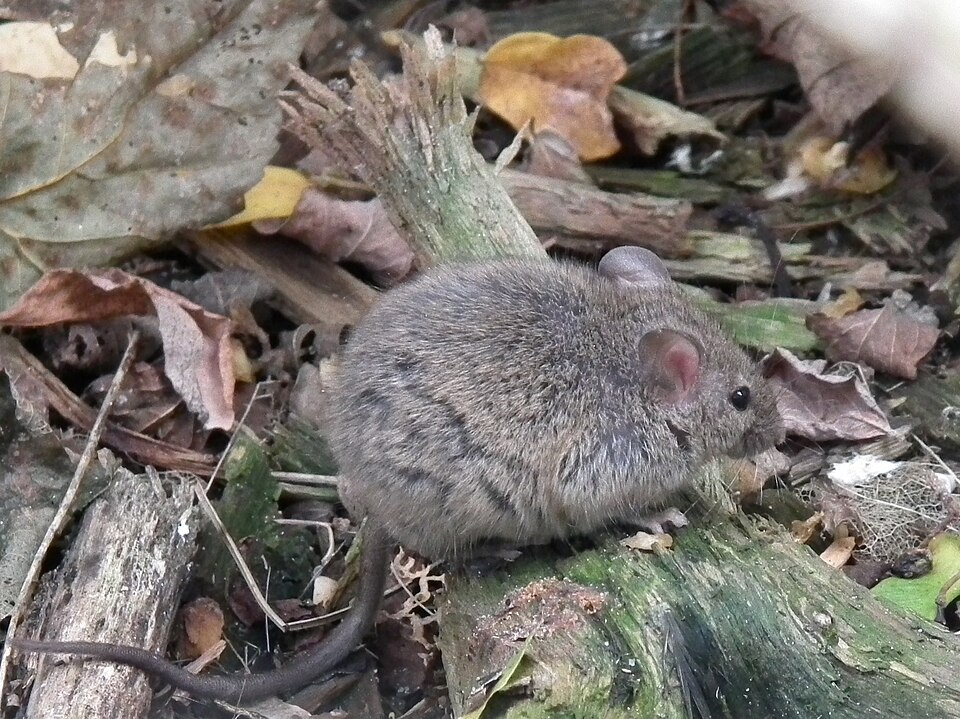
Small mammals · Difficulty: Beginner
Key facts and care guidance for Fancy mouse (Mus musculus) (origin: Domesticated form of the house mouse, originally from the steppes of Asia to North Africa and now found worldwide. Fancy mice have been bred in many colour varieties for centuries.). Adult size around Head-body 7–10 cm, tail about as long; 20–40 g.. Life expectancy 1.5–3 years; many die at around 2 years from tumours.. The values below are carefully researched guidance.
Short answers
Fancy mouse: How big does the enclosure need to be?
From 80×50×80 cm (TVT leaflet no. 158 'Mice', 2013, for a small group; the German welfare group bmt gives 70×50×70 cm, Austrian law only 80×30×30 cm per pair). Add about 20 % floor area per extra animal. Furnish in three dimensions: levels, ropes, ladders, several houses, tubes and a solid running wheel (at least 20 cm diameter). Horizontal bars no more than 7 mm apart or a rodent enclosure with large mesh panels; plain aquariums are unsuitable because of poor ventilation.
Fancy mouse: What temperature does it need?
Daytime 18–24 °C room temperature; no draughts, no direct sun, not next to a radiator., at night Same as by day; avoid big temperature swings, cold basements are unsuitable.
Fancy mouse: Does it need UVB lighting?
UVB: Not needed – daylight in the room is enough.
Fancy mouse: How long do they live?
Life expectancy: 1.5–3 years; many die at around 2 years from tumours.
Fancy mouse: Is it suitable for beginners?
Yes – it is considered suitable for beginners (difficulty: Beginner).
Climate
- Daytime temperature
- 18–24 °C room temperature; no draughts, no direct sun, not next to a radiator.
- Night temperature
- Same as by day; avoid big temperature swings, cold basements are unsuitable.
- Humidity
- 40–60 % (normal room air; above 60 % skin eczema and respiratory infections are likely)
- UVB
- Not needed – daylight in the room is enough.
Enclosure
- Minimum size
- from 80×50×80 cm (TVT leaflet no. 158 'Mice', 2013, for a small group; the German welfare group bmt gives 70×50×70 cm, Austrian law only 80×30×30 cm per pair). Add about 20 % floor area per extra animal. Furnish in three dimensions: levels, ropes, ladders, several houses, tubes and a solid running wheel (at least 20 cm diameter). Horizontal bars no more than 7 mm apart or a rodent enclosure with large mesh panels; plain aquariums are unsuitable because of poor ventilation.
- Substrate
- About 10 cm (more is better) of dust-free wood shavings or small-animal bedding mixed with hay and straw (TVT); hay, tissue or unprinted kitchen paper for nest building.
Feeding
- Food
- Mouse seed mix as staple, a little vegetable, herbs and some fruit daily. Animal protein once or twice a week (mealworms, egg, quark, a little dry cat food). Gnawing twigs from unsprayed trees and hay always available; water preferably in a heavy bowl.
- Feeding interval
- Once a day, always at the same time (TVT); do not leave fresh food in overnight.
Key facts
- Adult size
- Head-body 7–10 cm, tail about as long; 20–40 g.
- Life expectancy
- 1.5–3 years; many die at around 2 years from tumours.
- Origin
- Domesticated form of the house mouse, originally from the steppes of Asia to North Africa and now found worldwide. Fancy mice have been bred in many colour varieties for centuries.
- Protection status
- Not protected. The house mouse is expressly excluded from the protection of native mammals in the German BArtSchV; not CITES, not EU wildlife trade regulation, not on the EU invasive species list.
- Brumation
- None.
- Cohabitation
- Group. Least stressful are 3–4 females (ideally littermates) or females with a neutered male; intact males usually fight after sexual maturity. Introduce new animals carefully on neutral ground, otherwise severe, sometimes fatal fights occur (TVT).
Notes
Dancing mice and other varieties with inherited defects should be avoided; breeding dancing mice counts as torture breeding. Fancy mice are also bred as feeder animals. Only feed live vertebrates if the animal refuses dead food – frozen food is less stressful for both. Killing only by competent persons (§ 4 German Animal Welfare Act).
Do you keep this species?
Add your animal to Reptoria – Reptoria reminds you about feeding and shedding. Add your animal for free →
Fancy mouse (Mus musculus) currently offered
- 3 Weibliche Farbmäuse – Black Piebald · Mühlhausen · 40 €
Related species
- African pygmy mouse (Mus minutoides) – Intermediate
- Eurasian harvest mouse (Micromys minutus) – Expert
- Cairo spiny mouse (Acomys cahirinus) – Intermediate
- Natal multimammate mouse (Mastomys natalensis) – Intermediate
- Barbary striped grass mouse (Lemniscomys barbarus) – Intermediate
- Campbell's dwarf hamster (Phodopus campbelli) – Beginner
- Chinese hamster (Chinese striped hamster) (Cricetulus griseus) – Beginner
- Djungarian hamster (winter white dwarf hamster) (Phodopus sungorus) – Beginner
What you need to start
To keep Fancy mouse (Mus musculus) you typically need: a suitable enclosure (from 80×50×80 cm (TVT leaflet no. 158 'Mice', 2013, for a small group; the German welfare group bmt gives 70×50×70 cm, Austrian law only 80×30×30 cm per pair). Add about 20 % floor area per extra animal. Furnish in three dimensions: levels, ropes, ladders, several houses, tubes and a solid running wheel (at least 20 cm diameter). Horizontal bars no more than 7 mm apart or a rodent enclosure with large mesh panels; plain aquariums are unsuitable because of poor ventilation.), substrate (About 10 cm (more is better) of dust-free wood shavings or small-animal bedding mixed with hay and straw (TVT); hay, tissue or unprinted kitchen paper for nest building.), a heat source with a thermostat, thermometer and hygrometer, a water dish and hides. You will find equipment in the Reptoria marketplace.
The complete, interactive care database is in the Reptoria app.
Last updated: 30 October 2026 · Editor: Reptoria editorial team · Sources include: TVT-Merkblatt Nr. 158 „Mäuse“ – Gruppenhaltung, gleichgeschlechtlich oder Männchen kastrieren, Eingliederung fremder Tiere riskant, Tanzmäuse abzulehnen – https://tierschutz.hessen.de/sites/tierschutz.hessen.de/files/2024-02/tvt-mb_158_heimtiere_maeuse_okt._2013_1.pdf, bmt-Flyer „Mäuse“ – empfindlich bei Luftfeuchte über 60 %, Zugluft, Temperaturschwankungen – https://bmt-tierschutz.bmtev.de/lib_dateien/infomaterial/flyer/flyer_maeuse.pdf, Wikipedia „Farbmaus“ – Abstammung, Tanzmaus-Zucht als Qualzucht, Männchen unverträglich, Lebensdauer, Tumore, Futtertier – https://de.wikipedia.org/wiki/Farbmaus, BArtSchV Anlage 1, Sammeleintrag Mammalia spp. – heimische Säugetiere besonders geschützt, Hausmaus ausdrücklich ausgenommen – https://www.gesetze-im-internet.de/bartschv_2005/anlage_1.html, Durchführungsverordnung (EU) 2025/1422 – Unionsliste, keine Mus-Art – https://umwelt-online.de/recht/eu/25c/25c_1422.htm
All values are non-binding guidance and do not replace expert advice. Research thoroughly from several sources before acquiring and keeping an animal, and observe the applicable law (species and animal protection in particular).