Natal multimammate mouse (Mastomys natalensis)
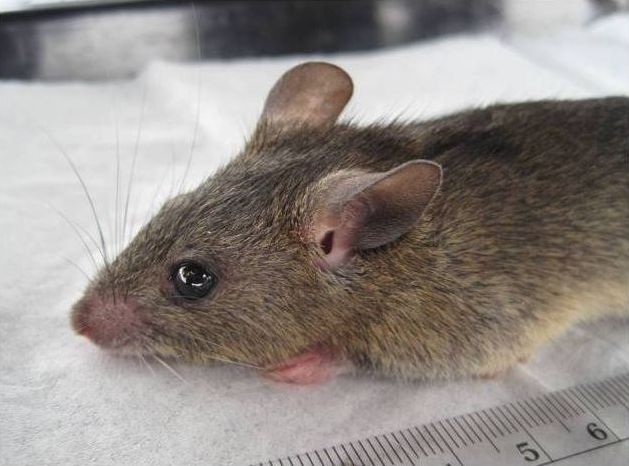
Small mammals · Difficulty: Intermediate
Key facts and care guidance for Natal multimammate mouse (Mastomys natalensis) (origin: Sub-Saharan Africa: savannah, bushland, fields and settlements; a typical follower of human settlement. Animals in the trade come from laboratory and feeder breeding stock.). Adult size around Head-body 9–15 cm, tail about as long; 40–80 g, males heavier.. Life expectancy Usually 2–3 years in human care.. The values below are carefully researched guidance.
Short answers
Natal multimammate mouse: How big does the enclosure need to be?
From 100×50×80 cm (for a group of 3–5 animals; derived from TVT leaflet no. 158 'Mice', which already asks 80×50×80 cm for the smaller fancy mice – multimammate mice weigh about twice as much). Add roughly 20 % floor area per extra animal. Well ventilated (mesh top or wood/glass rodent enclosure), several levels, houses and tubes; solid running wheel of at least 28 cm diameter. Escape-proof, bar spacing no more than 7 mm.
Natal multimammate mouse: What temperature does it need?
Daytime 20–24 °C room temperature; avoid draughts, direct sun and spots next to radiators., at night At night it may drop to about 18 °C, not lower.
Natal multimammate mouse: Does it need UVB lighting?
UVB: Not needed – nocturnal mammal, normal daylight in the room is enough.
Natal multimammate mouse: How long do they live?
Life expectancy: Usually 2–3 years in human care.
Natal multimammate mouse: Is it suitable for beginners?
Rather not – it is considered an intermediate species (difficulty: Intermediate).
Climate
- Daytime temperature
- 20–24 °C room temperature; avoid draughts, direct sun and spots next to radiators.
- Night temperature
- At night it may drop to about 18 °C, not lower.
- Humidity
- 40–60 % (normal room air; above 60 % and wet bedding encourage skin and respiratory problems)
- UVB
- Not needed – nocturnal mammal, normal daylight in the room is enough.
Enclosure
- Minimum size
- from 100×50×80 cm (for a group of 3–5 animals; derived from TVT leaflet no. 158 'Mice', which already asks 80×50×80 cm for the smaller fancy mice – multimammate mice weigh about twice as much). Add roughly 20 % floor area per extra animal. Well ventilated (mesh top or wood/glass rodent enclosure), several levels, houses and tubes; solid running wheel of at least 28 cm diameter. Escape-proof, bar spacing no more than 7 mm.
- Substrate
- 15–20 cm of low-dust small-animal bedding or wood shavings mixed with hay and straw so tunnels hold; hay and unprinted kitchen paper as nesting material.
Feeding
- Food
- Good mouse or gerbil mix (seeds, grain), a little vegetable and herbs daily, little fruit. Animal protein once or twice a week: insects (live or dried), hard-boiled egg or low-fat quark. Hay and unsprayed fruit-tree twigs always available, fresh water in a bowl.
- Feeding interval
- Feed once a day in the evening, remove fresh food after a few hours.
Key facts
- Adult size
- Head-body 9–15 cm, tail about as long; 40–80 g, males heavier.
- Life expectancy
- Usually 2–3 years in human care.
- Origin
- Sub-Saharan Africa: savannah, bushland, fields and settlements; a typical follower of human settlement. Animals in the trade come from laboratory and feeder breeding stock.
- Protection status
- Not protected: not on the EU list of invasive species, the German BArtSchV, the EU wildlife trade regulation or CITES. Keeping is allowed without papers; animal welfare law applies.
- Brumation
- None – keep evenly warm all year.
- Cohabitation
- Group. Least stressful are same-sex groups of littermates (females usually get on better); mixed groups only with a neutered male, otherwise young every three to four weeks. Introduce unfamiliar adults slowly and on neutral ground.
Notes
Scientific name: almost always sold as Mastomys natalensis; genetic studies show, however, that most laboratory, pet and feeder stocks are Southern multimammate mice (Mastomys coucha) – the two species look identical and are kept the same way. The species is also bred as a feeder animal. Only feed live vertebrates if the animal refuses dead food – frozen food is less stressful for both. Killing only by competent persons (§ 4 German Animal Welfare Act). Wild animals in West Africa carry Lassa virus; captive-bred animals from controlled breeding are considered safe, still wash hands after contact.
Do you keep this species?
Add your animal to Reptoria – Reptoria reminds you about feeding and shedding. Add your animal for free →
Look for Natal multimammate mouse (Mastomys natalensis) in the marketplace →
Related species
- African pygmy mouse (Mus minutoides) – Intermediate
- Eurasian harvest mouse (Micromys minutus) – Expert
- Fancy mouse (Mus musculus) – Beginner
- Cairo spiny mouse (Acomys cahirinus) – Intermediate
- Barbary striped grass mouse (Lemniscomys barbarus) – Intermediate
- Four-toed hedgehog (African pygmy hedgehog) (Atelerix albiventris) – Intermediate
- Chinchilla (long-tailed chinchilla) (Chinchilla lanigera) – Intermediate
- Common degu (Octodon degus) – Intermediate
What you need to start
To keep Natal multimammate mouse (Mastomys natalensis) you typically need: a suitable enclosure (from 100×50×80 cm (for a group of 3–5 animals; derived from TVT leaflet no. 158 'Mice', which already asks 80×50×80 cm for the smaller fancy mice – multimammate mice weigh about twice as much). Add roughly 20 % floor area per extra animal. Well ventilated (mesh top or wood/glass rodent enclosure), several levels, houses and tubes; solid running wheel of at least 28 cm diameter. Escape-proof, bar spacing no more than 7 mm.), substrate (15–20 cm of low-dust small-animal bedding or wood shavings mixed with hay and straw so tunnels hold; hay and unprinted kitchen paper as nesting material.), a heat source with a thermostat, thermometer and hygrometer, a water dish and hides. You will find equipment in the Reptoria marketplace.
The complete, interactive care database is in the Reptoria app.
Last updated: 30 October 2026 · Editor: Reptoria editorial team · Sources include: Thieme Heimtier-Info „Maus“ (vet.thieme.de, 2020) – Futterzusammensetzung Kleinmäuse, Eiweißfutter, Nageäste – https://tiermedizin.thieme.de/fileadmin/tiermedizin/04_Downloads/02_Patientenb%C3%B6gen/Maus.pdf, bmt-Flyer „Mäuse“ – Empfindlichkeit gegen Luftfeuchte über 60 %, Zugluft, Terrarien schlecht belüftet – https://bmt-tierschutz.bmtev.de/lib_dateien/infomaterial/flyer/flyer_maeuse.pdf, Scholz & Wilson 2016, „Care of Mastomys in the laboratory“, Lab Animal – Laborkolonie ist M. coucha, Haltungsempfehlungen aus 15 Jahren Erfahrung – https://pubmed.ncbi.nlm.nih.gov/27203263/, Wikipedia „Southern multimammate mouse“ – Labor-/Heimtierstämme meist M. coucha, nur genetisch von M. natalensis unterscheidbar, Heim- und Futtertier – https://en.wikipedia.org/wiki/Southern_multimammate_mouse, BArtSchV Anlage 1 – nur heimische Säugetiere als Sammeleintrag, Mastomys nicht genannt – https://www.gesetze-im-internet.de/bartschv_2005/anlage_1.html
All values are non-binding guidance and do not replace expert advice. Research thoroughly from several sources before acquiring and keeping an animal, and observe the applicable law (species and animal protection in particular).