Fancy rat (Rattus norvegicus)
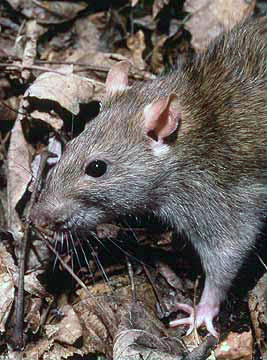
Small mammals · Difficulty: Beginner
Key facts and care guidance for Fancy rat (Rattus norvegicus) (origin: Domesticated form of the brown rat, originally from Asia; fancy rats descend from laboratory rats and have been bred since the 19th century.). Adult size around Head-body 20–28 cm, tail about as long; females 250–350 g, males 400–550 g.. Life expectancy 2–3 years, rarely up to 4 years.. The values below are carefully researched guidance.
Short answers
Fancy rat: How big does the enclosure need to be?
From 100×60×100 cm (Thieme pet info 'Rat' for a pair; TVT leaflet no. 160 'Rats': 100×50×100 cm for up to three rats or as a tower 80×50×120 cm; Swiss law at least 0.5 m² for 2–5 rats plus 0.05 m² per extra animal). Wire cage with several continuous solid levels (no mesh floors), hammocks, houses, ropes and tubes; plus safe free-roaming time every day. Commercial running wheels are too small and unsuitable.
Fancy rat: What temperature does it need?
Daytime 18–22 °C room temperature; rats cope badly with heat (critical from about 26 °C) and are very sensitive to draughts., at night Same as by day; strictly avoid draughts.
Fancy rat: Does it need UVB lighting?
UVB: Not needed. Keep albino rats in a bright spot but out of direct sunlight – their eyes are sensitive to light (TVT).
Fancy rat: How long do they live?
Life expectancy: 2–3 years, rarely up to 4 years.
Fancy rat: Is it suitable for beginners?
Yes – it is considered suitable for beginners (difficulty: Beginner).
Climate
- Daytime temperature
- 18–22 °C room temperature; rats cope badly with heat (critical from about 26 °C) and are very sensitive to draughts.
- Night temperature
- Same as by day; strictly avoid draughts.
- Humidity
- 40–60 % (normal room air; wire cage rather than closed terrarium so ammonia can escape)
- UVB
- Not needed. Keep albino rats in a bright spot but out of direct sunlight – their eyes are sensitive to light (TVT).
Enclosure
- Minimum size
- from 100×60×100 cm (Thieme pet info 'Rat' for a pair; TVT leaflet no. 160 'Rats': 100×50×100 cm for up to three rats or as a tower 80×50×120 cm; Swiss law at least 0.5 m² for 2–5 rats plus 0.05 m² per extra animal). Wire cage with several continuous solid levels (no mesh floors), hammocks, houses, ropes and tubes; plus safe free-roaming time every day. Commercial running wheels are too small and unsuitable.
- Substrate
- 5–10 cm of small-animal bedding, hemp or linen bedding or wood shavings, partly with hay or straw; unprinted, unscented tissue as nesting material (TVT). After cleaning mix in some old bedding so the familiar smell remains.
Feeding
- Food
- Rat food of grain and vegetable flakes as a base, fresh vegetables daily, some fruit and herbs; a little animal protein once or twice a week (hard-boiled egg, hard cheese, feeder insects, a little dry dog food). Hide food so they have to work for it. Gnawing material always available and fresh water daily.
- Feeding interval
- Once a day, ideally in the evening; portion it so that nothing gets hoarded (risk of obesity).
Key facts
- Adult size
- Head-body 20–28 cm, tail about as long; females 250–350 g, males 400–550 g.
- Life expectancy
- 2–3 years, rarely up to 4 years.
- Origin
- Domesticated form of the brown rat, originally from Asia; fancy rats descend from laboratory rats and have been bred since the 19th century.
- Protection status
- Not protected. The brown rat is expressly excluded from the protection of native mammals in the German BArtSchV; not CITES, not EU wildlife trade regulation, not on the EU invasive species list.
- Brumation
- None.
- Cohabitation
- Group. Never keep alone; ideally 3–6 animals of the same sex with mixed ages. Mixed groups only with neutered males. Integrate young rats into existing groups ideally in pairs (TVT).
Notes
Some varieties are considered torture breeds, such as hairless, rex, patchwork and tailless rats (TVT); possible health effects of dumbo rats are debated. Exercise balls are harmful to welfare. Fancy rats are also bred as feeder animals. Only feed live vertebrates if the animal refuses dead food – frozen food is less stressful for both. Killing only by competent persons (§ 4 German Animal Welfare Act).
Do you keep this species?
Add your animal to Reptoria – Reptoria reminds you about feeding and shedding. Add your animal for free →
Related species
- Campbell's dwarf hamster (Phodopus campbelli) – Beginner
- Chinese hamster (Chinese striped hamster) (Cricetulus griseus) – Beginner
- Djungarian hamster (winter white dwarf hamster) (Phodopus sungorus) – Beginner
- Fancy mouse (Mus musculus) – Beginner
- Mongolian gerbil (Meriones unguiculatus) – Beginner
- African pygmy mouse (Mus minutoides) – Intermediate
- Four-toed hedgehog (African pygmy hedgehog) (Atelerix albiventris) – Intermediate
- Chinchilla (long-tailed chinchilla) (Chinchilla lanigera) – Intermediate
What you need to start
To keep Fancy rat (Rattus norvegicus) you typically need: a suitable enclosure (from 100×60×100 cm (Thieme pet info 'Rat' for a pair; TVT leaflet no. 160 'Rats': 100×50×100 cm for up to three rats or as a tower 80×50×120 cm; Swiss law at least 0.5 m² for 2–5 rats plus 0.05 m² per extra animal). Wire cage with several continuous solid levels (no mesh floors), hammocks, houses, ropes and tubes; plus safe free-roaming time every day. Commercial running wheels are too small and unsuitable.), substrate (5–10 cm of small-animal bedding, hemp or linen bedding or wood shavings, partly with hay or straw; unprinted, unscented tissue as nesting material (TVT). After cleaning mix in some old bedding so the familiar smell remains.), a heat source with a thermostat, thermometer and hygrometer, a water dish and hides. You will find equipment in the Reptoria marketplace.
The complete, interactive care database is in the Reptoria app.
Last updated: 30 October 2026 · Editor: Reptoria editorial team · Sources include: Wikipedia „Farbratte“ – Lebensdauer 2–3 Jahre, Mykoplasmose, Tumore, Abszesse, Qualzuchtdiskussion Dumbo/Rex/Nackt, keine Einzelhaltung – https://de.wikipedia.org/wiki/Farbratte, TVT-Merkblatt Nr. 160 „Ratten“ – Qualzuchten (Rex, Nackt, Patchwork, Tailless), Laufbälle, Gruppenhaltung, Krankheiten, 2 Stunden Zeit pro Tag, Biologie – https://tierschutz.hessen.de/sites/tierschutz.hessen.de/files/2024-02/tvt-mb_160_heimtiere_ratten_apr._2014_01.pdf, BArtSchV Anlage 1, Sammeleintrag Mammalia spp. – Wanderratte und Hausratte ausdrücklich ausgenommen – https://www.gesetze-im-internet.de/bartschv_2005/anlage_1.html, Durchführungsverordnung (EU) 2025/1422 – Unionsliste, keine Rattus-Art – https://umwelt-online.de/recht/eu/25c/25c_1422.htm, Species+ (UNEP-WCMC), Taxon Rattus (ID 1084) – cites_listing NC, eu_listing NC (nicht gelistet) – https://speciesplus.net/api/v1/taxon_concepts/1084
All values are non-binding guidance and do not replace expert advice. Research thoroughly from several sources before acquiring and keeping an animal, and observe the applicable law (species and animal protection in particular).