Mongolian gerbil (Meriones unguiculatus)
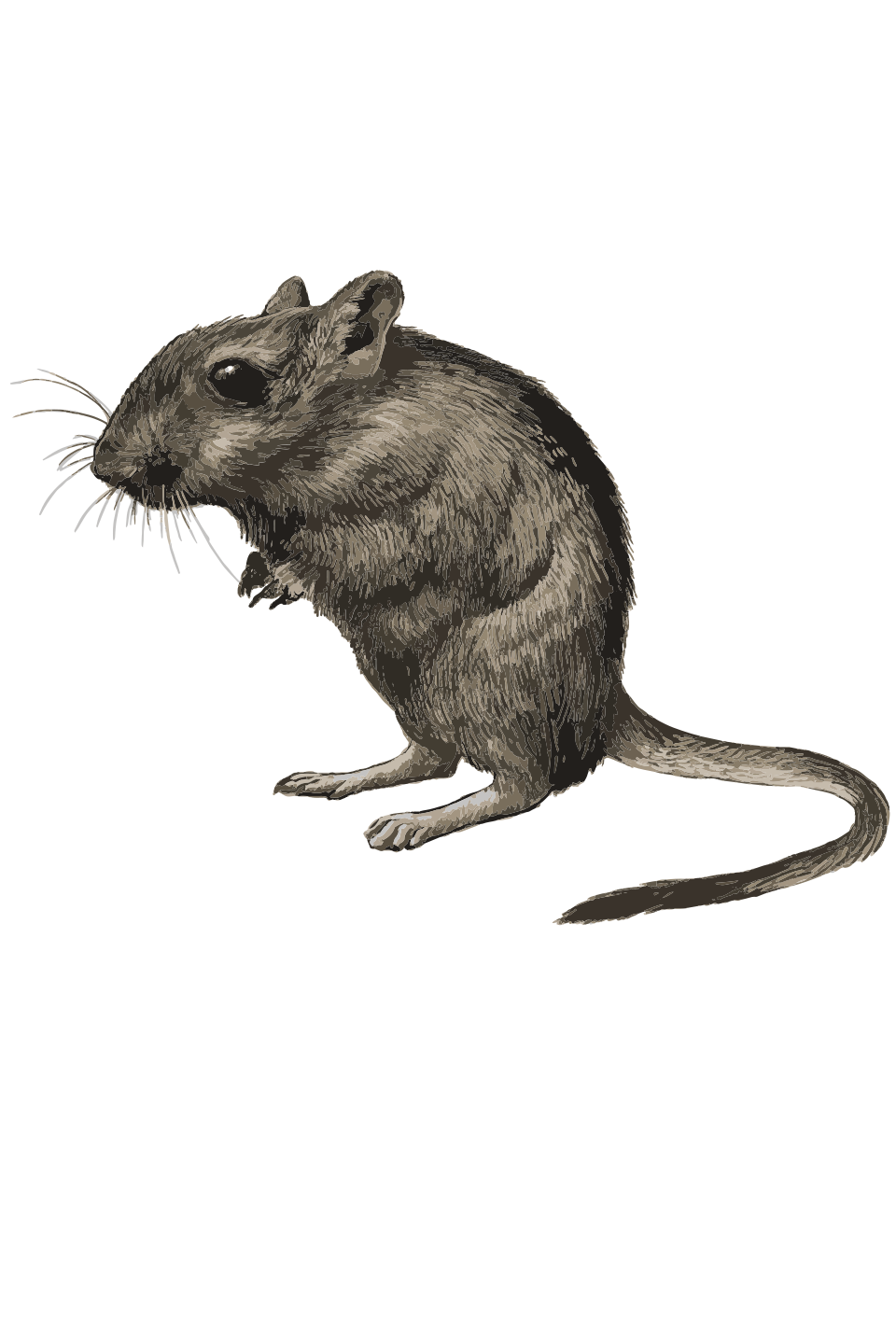
Small mammals · Difficulty: Beginner
Key facts and care guidance for Mongolian gerbil (Meriones unguiculatus) (origin: Steppes, semi-deserts and grassland of Mongolia, northern China and southern Siberia. All pet and laboratory animals go back to a few wild-caught animals from 1935.). Adult size around Head-body 10–13 cm, tail 9–11 cm with a tuft; females 70–100 g, males 80–130 g.. Life expectancy Usually 3–4 years, up to about 5 years.. The values below are carefully researched guidance.
Short answers
Mongolian gerbil: How big does the enclosure need to be?
From 120×50×50 cm (bmt leaflet 'Gerbils as pets' 2025, aquarium with breathable cover; TVT per a gerbil guide 100×50×50 cm for at most 6 animals; Swiss law at least 0.5 m² for 2–5 animals). Because the bedding should be 30–40 cm deep, a taller tank or a mesh top is needed so space remains above it. Furnishing: buried houses of clay or wood, cork tubes, levels of wood/stone (no mesh, no plastic), sand bath, running wheel of at least 30 cm diameter with a solid running surface.
Mongolian gerbil: What temperature does it need?
Daytime 18–24 °C room temperature; gerbils like to sunbathe, so one corner may get some sun for a few hours a day – but never the whole tank (risk of heatstroke)., at night A slight drop at night is fine; not below about 15 °C.
Mongolian gerbil: Does it need UVB lighting?
UVB: Not needed – daylight in the room is enough; use flicker-free lighting.
Mongolian gerbil: How long do they live?
Life expectancy: Usually 3–4 years, up to about 5 years.
Mongolian gerbil: Is it suitable for beginners?
Yes – it is considered suitable for beginners (difficulty: Beginner).
Climate
- Daytime temperature
- 18–24 °C room temperature; gerbils like to sunbathe, so one corner may get some sun for a few hours a day – but never the whole tank (risk of heatstroke).
- Night temperature
- A slight drop at night is fine; not below about 15 °C.
- Humidity
- 30–50 % (dry room air; remove damp bedding immediately)
- UVB
- Not needed – daylight in the room is enough; use flicker-free lighting.
Enclosure
- Minimum size
- from 120×50×50 cm (bmt leaflet 'Gerbils as pets' 2025, aquarium with breathable cover; TVT per a gerbil guide 100×50×50 cm for at most 6 animals; Swiss law at least 0.5 m² for 2–5 animals). Because the bedding should be 30–40 cm deep, a taller tank or a mesh top is needed so space remains above it. Furnishing: buried houses of clay or wood, cork tubes, levels of wood/stone (no mesh, no plastic), sand bath, running wheel of at least 30 cm diameter with a solid running surface.
- Substrate
- 30–40 cm of diggable bedding (TBB Switzerland: at least 40 cm; bmt: at least 30 cm), one third each of dust-extracted wood shavings, hay and straw so stable tunnels form. Bedding that is too shallow leads to constant digging in the corners.
Feeding
- Food
- Low-fat mix of small seeds (e.g. budgie or gerbil food), plus grasses, herbs, millet and sprouts; always offer hay. Animal protein once a week (feeder insects, hard-boiled egg, a little dry cat food). Feed hardly any fruit or sweet vegetables, as gerbils are prone to diabetes. Fresh hazel, birch or fruit-tree twigs for gnawing.
- Feeding interval
- Once a day; scatter seeds in the bedding. Food and water bowls on a stable platform above the bedding.
Key facts
- Adult size
- Head-body 10–13 cm, tail 9–11 cm with a tuft; females 70–100 g, males 80–130 g.
- Life expectancy
- Usually 3–4 years, up to about 5 years.
- Origin
- Steppes, semi-deserts and grassland of Mongolia, northern China and southern Siberia. All pet and laboratory animals go back to a few wild-caught animals from 1935.
- Protection status
- Not protected: not on the EU invasive species list, not in the German BArtSchV, the EU wildlife trade regulation or CITES. Keeping is allowed without papers; in Switzerland keeping a single gerbil is prohibited.
- Brumation
- None – gerbils do not hibernate even in the wild.
- Cohabitation
- Pair. Least stressful are two animals of the same sex, ideally littermates (bmt); groups of up to 4–6 only with plenty of space and experience, male groups are usually more peaceful. Never simply put unfamiliar animals together – it can be fatal; even a few days apart can break up a group. Avoid mixed pairs (neutering is risky).
Notes
Never grab them by the tail: the tail skin comes off and does not regrow; the rest then has to be amputated. Buying animals with more than 80 % white, curly-coated or hairless animals is discouraged as torture breeding. Gerbils are also bred as feeder animals. Only feed live vertebrates if the animal refuses dead food – frozen food is less stressful for both. Killing only by competent persons (§ 4 German Animal Welfare Act).
Do you keep this species?
Add your animal to Reptoria – Reptoria reminds you about feeding and shedding. Add your animal for free →
Look for Mongolian gerbil (Meriones unguiculatus) in the marketplace →
Related species
- Fat-tailed gerbil (Pachyuromys duprasi) – Intermediate
- Campbell's dwarf hamster (Phodopus campbelli) – Beginner
- Chinese hamster (Chinese striped hamster) (Cricetulus griseus) – Beginner
- Djungarian hamster (winter white dwarf hamster) (Phodopus sungorus) – Beginner
- Fancy mouse (Mus musculus) – Beginner
- Fancy rat (Rattus norvegicus) – Beginner
- African pygmy mouse (Mus minutoides) – Intermediate
- Four-toed hedgehog (African pygmy hedgehog) (Atelerix albiventris) – Intermediate
What you need to start
To keep Mongolian gerbil (Meriones unguiculatus) you typically need: a suitable enclosure (from 120×50×50 cm (bmt leaflet 'Gerbils as pets' 2025, aquarium with breathable cover; TVT per a gerbil guide 100×50×50 cm for at most 6 animals; Swiss law at least 0.5 m² for 2–5 animals). Because the bedding should be 30–40 cm deep, a taller tank or a mesh top is needed so space remains above it. Furnishing: buried houses of clay or wood, cork tubes, levels of wood/stone (no mesh, no plastic), sand bath, running wheel of at least 30 cm diameter with a solid running surface.), substrate (30–40 cm of diggable bedding (TBB Switzerland: at least 40 cm; bmt: at least 30 cm), one third each of dust-extracted wood shavings, hay and straw so stable tunnels form. Bedding that is too shallow leads to constant digging in the corners.), a heat source with a thermostat, thermometer and hygrometer, a water dish and hides. You will find equipment in the Reptoria marketplace.
The complete, interactive care database is in the Reptoria app.
Last updated: 30 October 2026 · Editor: Reptoria editorial team · Sources include: Wikipedia „Mongolische Rennmaus“ – Kopf-Rumpf 97–132 mm, Schwanz 85–110 mm, Gewicht in Gefangenschaft, Tragzeit 24–26 Tage, Wurf ~5, Lebenserwartung 3–4 Jahre, kein Winterschlaf – https://de.wikipedia.org/wiki/Mongolische_Rennmaus, BArtSchV Anlage 1 – nur heimische Säugetiere als Sammeleintrag, Meriones nicht genannt – https://www.gesetze-im-internet.de/bartschv_2005/anlage_1.html, Durchführungsverordnung (EU) 2025/1422 – Unionsliste, keine Meriones-Art – https://umwelt-online.de/recht/eu/25c/25c_1422.htm, Species+ (UNEP-WCMC), Abfrage Gerbillinae 29.10.2026 – kein Eintrag der Unterfamilie – https://speciesplus.net/api/v1/auto_complete_taxon_concepts?taxonomy=CITES&taxon_concept_query=Gerbillinae, Species+ (UNEP-WCMC), Abfrage Meriones 29.10.2026 – kein Eintrag (nicht CITES, nicht EU-Anhang A–D) – https://speciesplus.net/api/v1/auto_complete_taxon_concepts?taxonomy=CITES&taxon_concept_query=Meriones
All values are non-binding guidance and do not replace expert advice. Research thoroughly from several sources before acquiring and keeping an animal, and observe the applicable law (species and animal protection in particular).